
FAT, Not Foe!
Read that again: Fat is one of the three essential macronutrients and is absolutely crucial to your well-being. Accepting the truth about what “fats” really are is the best way forward for your health journey.
In 2015, the British Medical Journal (BMJ) published a massive review concluding that there is no direct link between naturally occurring saturated fat and an increased risk of coronary heart disease, ischemic stroke, type 2 diabetes, or overall cardiovascular mortality.
Fats aren’t the enemy—they are a foundational requirement for life.
The Essential Roles of Fat in Your Body:
- Vitamin Absorption: Essential for absorbing fat-soluble vitamins A, D, E, and K.
- Insulation & Protection: Acts as a protective cushion and insulation for your vital organs.
- Brain & Heart Health: Vital for cognitive function and cardiovascular structural integrity.
- Temperature Regulation: Helps maintain a stable, healthy body temperature.
- Sustained Energy: Provides a continuous, long-burning source of fuel for the body.
- Hormone Production: Serves as the building block for essential chemical messengers.
- Cellular Function: Crucial for the creation, flexibility, and structure of all cell membranes.
- Immune & Blood Support: Needed for a robust immune system and the production of red and white blood cells.
- Radiant Exterior: Essential for vibrant eyes, glowing skin, healthy hair, and strong nails.
- Blood Sugar Stability: Slows down the release of glucose into the bloodstream.
- Weight Management: Because fat digests slowly, it provides prolonged satiety (fullness), which keeps cravings at bay.
Understanding the Types of Fats
The conversation shouldn’t be about avoiding fat entirely; it should be about choosing the right types of fats.
Most dietary fats come in the form of Triglycerides, which are made up of different types of fatty acids.
1. Saturated Fatty Acids
Typically, solid at room temperature (mostly found in animal products). While they provide abundant structural energy, overconsuming them without nutrient-dense whole foods can lead to unintended weight gain.
2. Unsaturated Fatty Acids
Typically liquid at room temperature, these are generally split into two highly beneficial categories:
Monounsaturated Fatty Acids (MUFAs)
Known for their powerful anti-inflammatory effects, high levels of antioxidant Vitamin E, and ability to help optimize cholesterol levels.
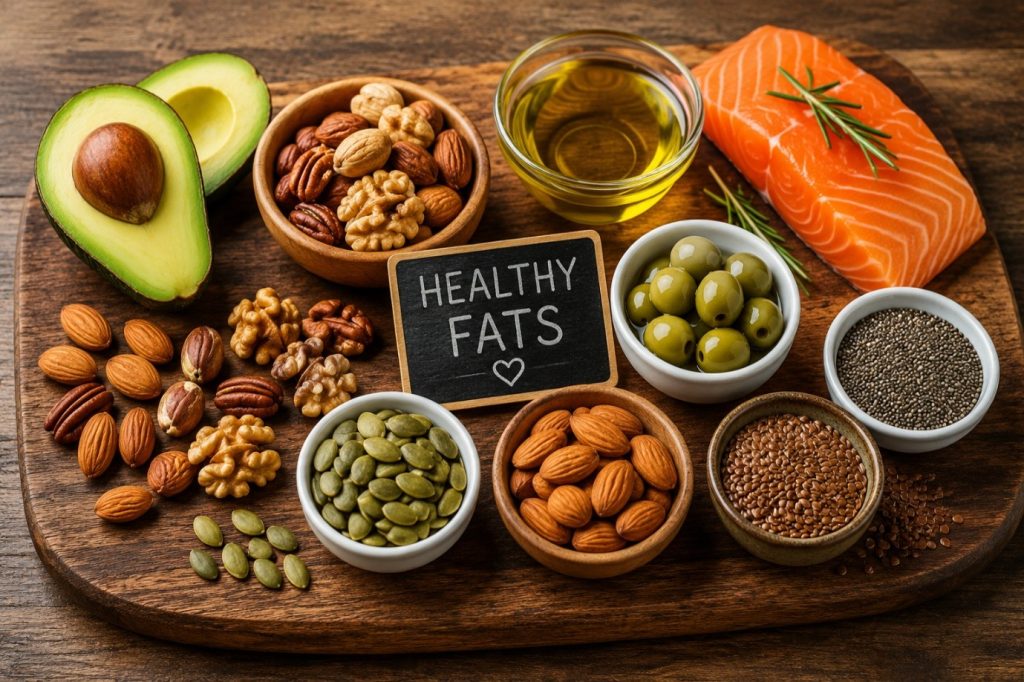
- Excellent Sources: Avocado, olive oil, canola oil, peanut oil, safflower oil, as well as almonds, walnuts, macadamias, cashews, pecans, and sesame seeds.
Polyunsaturated Fatty Acids (PUFAs)
These include the essential omega fatty acids that your body cannot manufacture on its own:
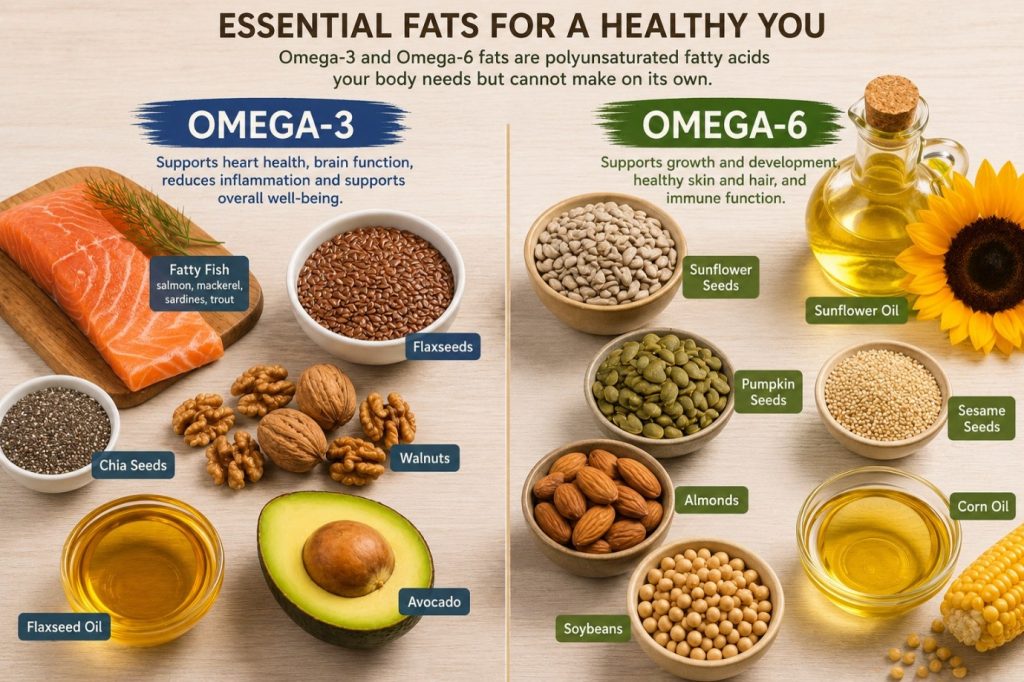
Omega-3 Fatty Acids: Highly concentrated in the brain and eyes. Essential for growth, sharp vision, and cognitive development. Omega-3s help protect the heart by reducing dangerous blood clots, lowering blood pressure, stabilizing irregular heartbeats, and calming systemic inflammation.
- Sources: Fatty fish (mackerel, salmon, sardines), walnuts, chia seeds, and oils like canola, soybean, and flaxseed.
- A Word of Caution: Overconsuming Omega-3 supplements carries risks, including increased bleeding times, delayed wound healing, and mild immune suppression. Balance is key!
Omega-6 Fatty Acids: Supports healthy skin renewal, joint comfort, and proper immune responses.
- Sources: Olives, flaxseeds, sesame seeds, hempseeds, wheat germ, and Evening Primrose oil.
- A Word of Caution: Overconsuming Omega-6 relative to Omega-3 can inadvertently promote systemic inflammation, which is a known precursor for chronic disease.
3. Trans Fatty Acids: The Good vs. The Ugly
Not all trans fats are created equal. It’s vital to know the difference:
- Naturally Occurring Trans Fats: Found in small amounts in dairy, beef, and lamb. These are relatively neutral regarding cardiovascular health when eaten in moderation. In fact, emerging research suggests they may offer mild metabolic and anti-inflammatory benefits.
- Artificially Created Trans Fats (The Real Foe): This is a purely industrial creation designed to artificially prolong product shelf life and enhance cheap flavours and textures. It is created through a chemical manufacturing process called hydrogenation, which turns liquid vegetable oils into solid partially hydrogenated oils (PHOs).
🚫 The Safety Verdict: In December 2023, the U.S. Food and Drug Administration (FDA) issued a final direct rule officially stripping partially hydrogenated oils (PHOs) of their “Generally Recognized as Safe” (GRAS) status. Artificial trans fats cause severe oxidative damage to your cells, spike inflammation, and aggressively raise LDL cholesterol.
Avoid items listing “partially hydrogenated oils” on the ingredient list, often hidden in commercial cakes, cookies, donuts, crackers, margarines, fast-food deep-fried items, and packaged convenience foods.
Phospholipids and Sterols
Beyond standard fats, your body relies on two other critical fat-like structures:
Phospholipids
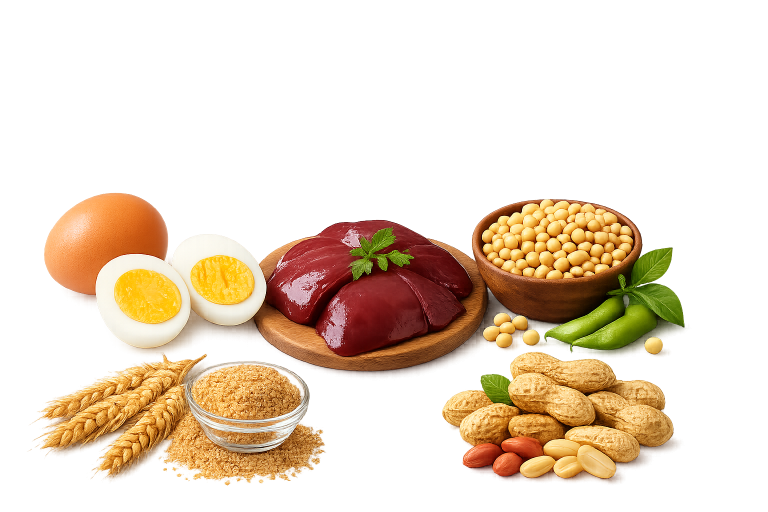
These are unique because one side dissolves perfectly in fat, while the other side is hydrophilic (water-loving). This dual nature makes them unparalleled natural emulsifiers—which is exactly why you add egg yolk to oil to create smooth mayonnaise! They are essential for keeping your cell membranes fluid and functioning.
- Top Sources: Eggs, liver, soybeans, wheat germ, and peanuts.
Sterols (The Truth About Cholesterol)
The most famous sterol of all is cholesterol. Only animal sources contain dietary cholesterol. Plant sterols, on the other hand, actually compete for absorption in your gut and can help lower overall blood cholesterol levels.
🔍 The Cholesterol Myth: Debunked
We have been conditioned to fear cholesterol, but your body needs it so desperately that your liver automatically manufactures between 800 and 1,500 mg of it every single day out of your normal, healthy fat intake!
Cholesterol is a vital architectural building block used to:
- Build and repair flexible, healthy cell walls.
- Produce vital hormones like estrogen, progesterone, and testosterone.
- Synthesize Vitamin D from sunlight.
- Create bile acids, which are required to digest the very food you eat.
- Provide critical insulation and structure to your brain tissue.
When does it become harmful?
Cholesterol itself isn’t the problem; it becomes harmful when its underlying transport vehicles (like specific LDL particles) fail, are oxidized by poor diet, or face systemic inflammation. This can cause the cholesterol to accumulate as plaque in the artery walls, restricting blood flow and leading to atherosclerosis, heart attacks, or strokes.
Because your wonderful body already synthesizes all the cholesterol it structurally requires, it is wise to keep your additional daily dietary intake from external sources balanced.
- Dietary Sources: Eggs, dairy, meat, poultry, and shellfish.
Recommended Daily Fat Intake
To keep your body firing on all cylinders, aim for fats to make up 20% to 35% of your total daily energy intake. Keep these simple boundaries in mind:
- Saturated Fats: Keep to less than 10% of your daily calorie intake.
- Dietary Cholesterol: Aim for less than 300 mg per day.
- Artificial Trans Fats: Keep as close to 0% as humanly possible by skipping synthetic, industrially altered foods.
- Prioritize Whole Fats: Focus on whole foods (like avocados, raw nuts, seeds, and extra virgin oils) rather than highly processed, solid, or commercially fried options.