Be CARB Clever
What exactly is a carbohydrate? At a basic chemical level, they are simply organic compounds made of Carbon (C), Hydrogen (H), and Oxygen (O). In fact, that is where the name comes from: Carbo (Carbon) + Hydrate (Water/Hydrogen and Oxygen).
Simple, right? Wrong!
Carbohydrates are the most diverse of all macronutrients. They span the spectrum from highly processed lollipops to nutrient-dense whole grains.
To make smart dietary choices, we need to understand how different carbs behave in our bodies.
Simple vs. Complex: The Chemical Breakdown
Except for meat and eggs, carbohydrates are found in almost every food group. We classify them by their chemical structure and how quickly our bodies can break them down into glucose (blood sugar).
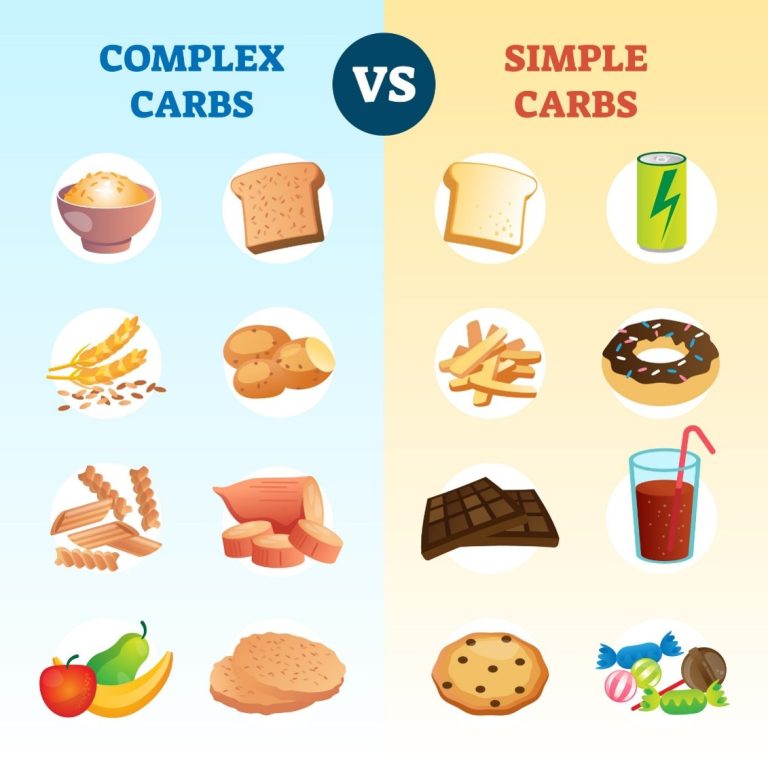
- Simple Carbohydrates (Fast Energy)
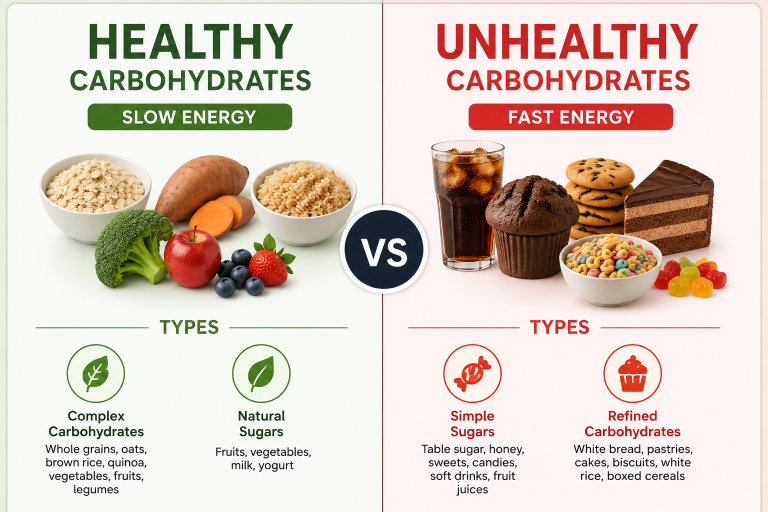
Simple carbs consist of one or two sugar molecules linked together. Because of their simple structure, they are digested rapidly, leading to quick spikes and drops in blood sugar.
- Monosaccharides (Single Sugars): Glucose (the body’s primary fuel, often called dextrose in food), fructose (fruit sugar), and galactose (found in milk).
- Disaccharides (Double Sugars): Pairs of single sugars. Examples include sucrose (table sugar: glucose + fructose), lactose (milk sugar: glucose + galactose), and maltose (malt sugar: glucose + glucose, often created during fermentation).
The Supermarket Trap: Simple carbs are highly visible on grocery shelves in the form of soft drinks, fruit juices, biscuits, cakes, chocolates, boxed cereals, and condiments. Eating these in excess causes rapid blood sugar fluctuations that heavily impact your energy, mood, and weight.
- Complex Carbohydrates (Sustained Energy)
Complex carbs are polysaccharides—long, intricate chains of sugar molecules. Because they contain starches and fiber, they take much longer to digest, ensuring a slow, steady release of glucose into your bloodstream.
- Starches: This is how plants store glucose. They can form unbranched chains (amylose) or highly branched chains (amylopectin). Our bodies easily break these down (hydrolyze them) into energy.
- Fibers: Unlike starches, fiber cannot be digested because our bodies lack the enzymes to break down its structural bonds. As a result, fiber yields no direct calories, but it is vital for our health.
The Power of Fiber and Resistant Starch
Fiber is an unsung hero of digestive health. It enters your digestive tract in two distinct forms:
- Soluble Fiber: Dissolves in water to form a gel-like substance. It is easily fermented by beneficial bacteria in the colon.
- Benefits: Lowers blood cholesterol and helps regulate glucose levels.
- Sources: Oats, barley, legumes, and citrus fruits.
- Insoluble Fiber: Does not dissolve in water. It adds bulk to your stool and speeds up the passage of food through the digestive tract.
- Benefits: Promotes regular bowel movements and alleviates constipation.
- Sources: Whole grains, bran, and vegetables.
The Secret Weapon: Resistant Starches
Some starches escape digestion and absorption entirely because of their physical structure. These are called resistant starches. They behave like soluble fiber, arriving in the large intestine intact to feed healthy gut bacteria, support colon health, and help combat diabetes and obesity.
- Excellent Sources: Whole or partially milled grains, legumes, just-ripe (slightly green) bananas, and cooked and then cooled potatoes, pasta, or rice.
The Processing Problem: When commercially processed grains have their outer bran layer stripped away (to make white flour or white rice), they lose their fiber and resistant starch. This turns a slow-burning complex carb into a fast-absorbing simple starch with very little nutritional value.
Sugar is Energy (But Quality Matters)
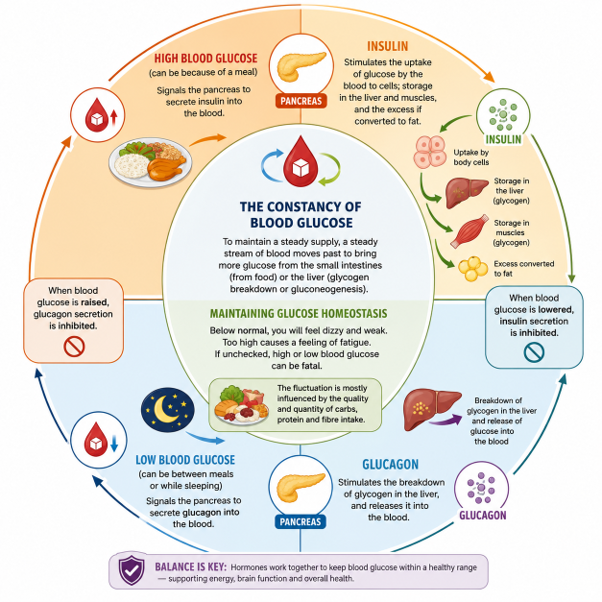
Glucose is the preferred fuel source for your brain, nervous system, and developing red blood cells. Even while sleeping, your body relies on glucose to keep your heart beating, maintain temperature, and digest food.
- The Protein-Sparing Action: If you don’t eat enough carbs (such as on an ultra-low-carb diet), your body is forced to break down protein from your muscles and liver to create glucose. Consuming adequate, smart carbs spares your muscles from being used as fuel.
- Ketosis: Fat can also be used as an alternative fuel source, which produces compounds called ketone bodies. If you make too many ketones without using them, it leads to ketosis, which can alter the acid-base balance of your body.
- Excess Storage: If glucose is abundant, your body burns it instead of fat. However, if you consume far more carbohydrates than your body needs, the excess is broken down and reassembled as fat, stored in your adipose tissue.
Understanding the Glycemic Index (GI)
Most starches and sugars are digested and absorbed within 1 to 4 hours of eating. The speed at which this happens determines your glycemic response (how fast and high your blood sugar rises). We measure this using the Glycemic Index (GI).
- Low-GI Foods (The Ideal): These are absorbed slowly, causing a gentle rise and smooth return to baseline. A low-GI diet helps regulate appetite, aids weight management, reduces systemic inflammation, and lowers heart disease risk.
- High-GI Foods: These are absorbed incredibly fast, causing a sharp spike in blood sugar followed by an energetic crash.
Note: A food’s Glycemic Index isn’t completely fixed! It changes depending on the plant variety, how the food is processed, cooking methods, food combinations, and even the time of day.
Smart Strategies to Cut Added Sugars
In food manufacturing, added sugar is used for taste, texture, preservation, and colour. However, added sugars (especially fructose) can overload the liver, promote fat-making pathways, and lead to insulin resistance, heart disease, and type 2 diabetes.
Health guidelines recommend a maximum daily allowance of 100 calories of added sugar for women (about 25g or 6 teaspoons) and 150 calories for men (about 38g or 9 teaspoons). These should be treated as “discretionary” calories.
Carb-Clever Action Steps:
- Sweeten naturally: Use your daily sugar budget to sweeten already nutrient-dense foods (like a drizzle of honey on plain Greek yogurt).
- Swap your drinks: Cut back on soda, energy drinks, and processed fruit juices. Opt for water, herbal teas, or black coffee.
- Rethink dessert: Choose fresh, whole fruit over cakes, cookies, and ice cream.
- Bake smarter: Replace sugar in recipes with unsweetened applesauce at a 1:1 ratio.
- Enhance with spices: Use cinnamon, nutmeg, ginger, vanilla extract, or almond extract to add sweetness without the sugar.
- Be a label detective: Check ingredients for hidden sugars (like sucrose, high-fructose corn syrup, barley malt, and dextrose).
Because glycogen molecules hold onto a lot of water, glycogen is bulky. The liver can only hold about a 24-hour supply. Once your glycogen stores are completely full, any leftover glucose is converted into fat for long-term storage.
Quick Reference: Fiber Types & Benefits
| Food Source | Action in the Body | Health Benefits |
|---|---|---|
| Fibres – Viscous, Soluble, More Fermentable | ||
| Barley, oats, oat bran, rye, fruits (apples, citrus), legumes (especially young green peas and black-eyed peas), seaweed, seeds and husks, many vegetables and added fibres. |
|
|
| Non-Viscous, Insoluble, Less Fermentable | ||
| Brown rice, fruits, legumes, seeds, vegetables (carrots, cabbage, Brussels sprouts), wheat bran, whole grains and fibre extracts. |
|
|
Finding Your Carbohydrate Balance
For a healthy lifestyle, the general recommendation is to get 45% to 65% of your daily energy from carbohydrates, aiming for 50 to 100 grams of high-quality complex carbohydrates per day, including 25 to 38 grams of fiber.
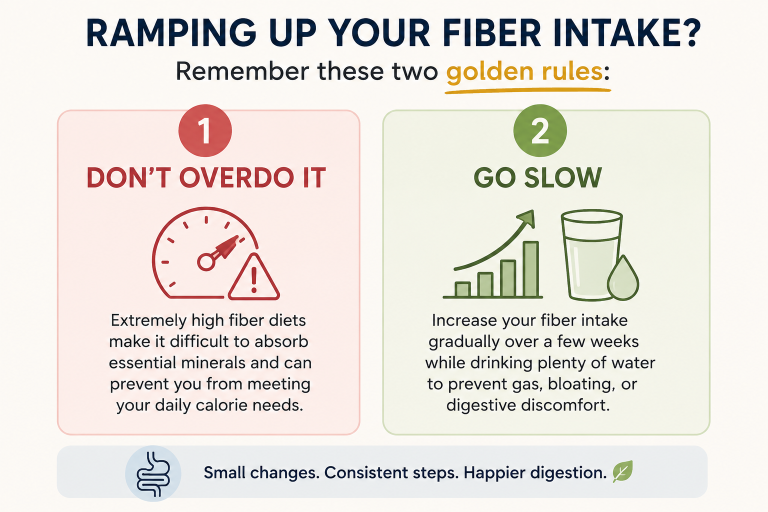
If you are ramping up your fiber intake, remember these two golden rules:
- Don’t overdo it: Extremely high fiber diets make it difficult to absorb essential minerals and can prevent you from meeting your daily calorie needs.
- Go slow: Increase your fiber intake gradually over a few weeks while drinking plenty of water to prevent gas, bloating, or digestive discomfort.